
Count everyone. Everyone counts.
Oregon Election Reform Act
A citizen’s initiative for the 2024 ballot: IP 19
What will the Reform Act do?
ENDS PARTISAN RESTRICTIONS ON WHO PARTICIPATES: Allows all registered voters to vote and all qualified candidates to compete in public primaries.
PROMOTES HEALTHY COMPETITION: Candidates compete on the same primary ballot. Removes barriers to competition. Top 5 advance to general election.
BROADENS VOTER CHOICE: Increases the number of candidate choices. Allows voters to choose any candidate on their primary ballot. Adopts new voting method.
Why open our primaries?
Our primary system is old and dysfunctional. We’re one of the few remaining states with a fully closed primary.
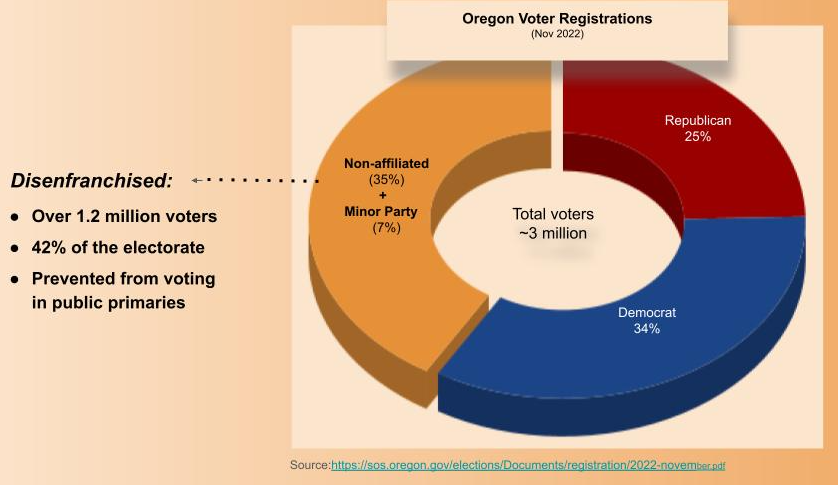
FAIRNESS: Over 1.2 million voters in Oregon are barred from voting in closed partisan primaries. That’s 42% of the electorate that’s shut out — and their numbers are growing.
PUBLIC FUNDING: Primary elections are publicly funded and administered. No Oregonian should be required to join a political party in order to vote in a public election.
VOTER CHOICE: Voters want to be able to choose from among all the candidates. Our closed partisan primaries don't allow that.
BETTER ACCOUNTABILITY: Elected officials perform better when competition is increased and they are incentivized to listen to their entire constituencies, not just partisan primary voters.
Help get this issue before voters

A Pro Democracy Reform


Join the movement
Tell your friends and family!

Volunteering
Help us move a mountain.
Spread the word about IP-19, the initiative that will transform our election process. Encourage friends and family to sign the petition.
It’s all hands on deck! We could really use your time and talent for signature-gathering, fundraising, outreach to voters, letter writing, website support - as you prefer.
Just send us an email: contact@electionreform.info

Organizing an event
Bring us together.
Every individual has the ability to motivate others and inspire true change.
By organizing an event, you become a crucial part of our movement by making sure that our mission is heard and has a far-reaching, lasting impact.
Just send us an email: contact@electionreform.info
